
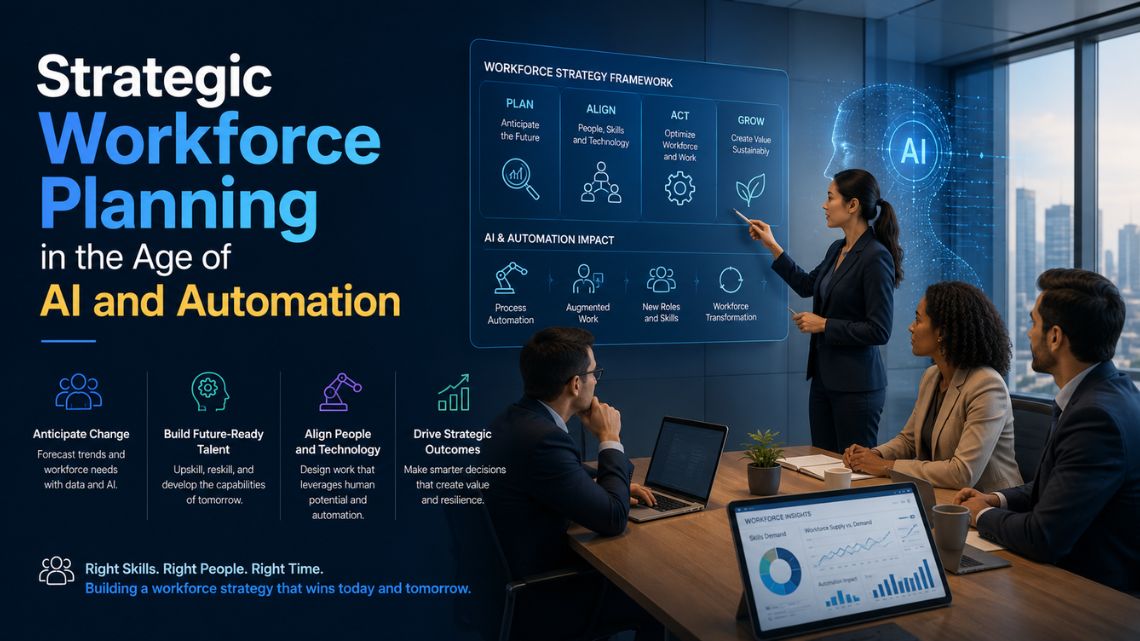
The emergence of AI, automation, and digital transformation across the Gulf has poised significant change across numerous industries while accelerating initiatives for economic diversification throughout the region. The leverage of advanced technologies within an organization has transformed workforce planning from a primary HR function to a core strategic management imperative.
In the current era of AI, the most pressing challenge goes beyond introducing new technologies; it is also about ensuring that employees have the skills and capabilities to derive optimized value through it. Essentially, strategic workforce planning has now emerged into a fundamental pillar to boost organizational resilience and long-term competitiveness.
Critical Workforce Trends Shaping Gulf Businesses
- Rising Demand for AI and Digital Talent
The demand for specific skills such as AI literacy, machine learning, cyber security, cloud computing, data analysis are on the rise across the Gulf region due to digital transformation agendas.
As organizations are competing for talent with these specializations, workforce shortages are now posing significant challenges to many organizations. A company with an internal pipeline of talent will be less reliant on the increasingly competitive external marketplace for hiring.
- Workforce Localization and National Talent Development
Workforce planning is central to national workforce development initiatives in the economic transformation of the Gulf region.
As organizations are being pressured to develop local talent, increase workforce participation and provide sustainable pathways for future generations, aligning organizational growth with the long-term national objectives of workforce development through strategic workforce planning is crucial.
Organizations that invest early in developing the capabilities of their local talent will yield both competitive advantages and organizational advantages.
- Hybrid and Flexible Workforce Models
Employee expectations have shifted considerably on the emphasis on flexibility in work, workplace and managerial experience, and on opportunities for career development than ever before.
Organizations are increasingly adopting hybrid workforce models, using digital collaboration tools to facilitate this transformation. This quit revolution has compelled leaders to reformulate their measures of productivity, employee engagement, and organizational culture.
Flexibility is no longer just an employee benefit, but it is becoming a workforce strategy.
- Continuous Learning as a Business Imperative
The shelf life of professional competencies will continue to decrease at an accelerated rate.
Competencies that hold high value today will have lesser value in the forthcoming years as technology and business intelligence models constantly evolve. Therefore, learning on a continuous basis is becoming a necessity in terms of a strategic initiative rather than an initiative for the purpose of professional development.
Organizations that optimize processes for learning loop within their day-to-day operations will generate their workforce greater level of performance effectiveness.
How to Build a Strategic Workforce Planning Framework
- Shift from Headcount to Capability
Historically, organizations have focused most of their workforce planning efforts on headcount rather than capabilities. In the future, organizations that are forward-looking will focus on the capabilities of their workforce.
In order to do this, leaders need to determine what critical skills they need in order to accomplish their company’s business strategy, as well as if their workforce can deliver those critical skills in the future. This allows for better talent investment and a stronger workforce.
- Implement Scenario Modeling
Because technology continues to change rapidly, it has increasingly become difficult for companies to forecast their workforce on a long-term basis.
Instead of using one workforce projection, companies should develop multiple workforce scenarios based on varying levels of generative AI, business growth, market conditions, and changes in regulations.
Scenario modeling provides leaders with a way to plan for uncertainty, while at the same time allowing for greater flexibility within their organization.
- Double Down on Upskilling
Successful organizations view workforce development as an investment in their business. All development and reskilling programs should not only focus on the technical aspects a role, but also on the human aspect of the task responsibilities, such as leadership skills, collaboration, communication, and critical thinking.
Building talent internally gives companies a larger return on their investment than solely relying on external hiring.
- Build Trust and Transparency
When organizations communicate openly with their employees about changes made to their workforce, career opportunities, and their workforce’s technology adoption strategy, employees are more likely to trust their employer and remain engaged. Additionally, when there is supposed to be transparency among organizations, employees will be less resistant to the changes and will be more likely to participate in the transformation.
When planning for their future workforce, organizations should create an opportunity for their employees to view the change as an opportunity instead of as a threat.
Conclusion
As AI automation revolutionizes the Gulf’s business environment, business performance will increasingly rely on workforce planning. Organizations that focus on workforce capabilities rather than staffing levels, invest in ongoing education and training and enable effective collaboration between humans and AI will be well positioned to respond to changes in their environments and create sustainable growth.
In today’s digital economy, aligning workforce strategy and technological change will continue to be a key source of competitive advantage. Organizations that succeed in the future will be those that invest in preparing the workforce for emerging technology trends.
For more articles, visit Entrepreneur Gulf.
Connect with Us:
LinkedIn: https://www.linkedin.com/company/entrepreneur-gulf/
Twitter X: https://x.com/entpre_gulf
Instagram: https://www.instagram.com/entrepreneurgulf/