
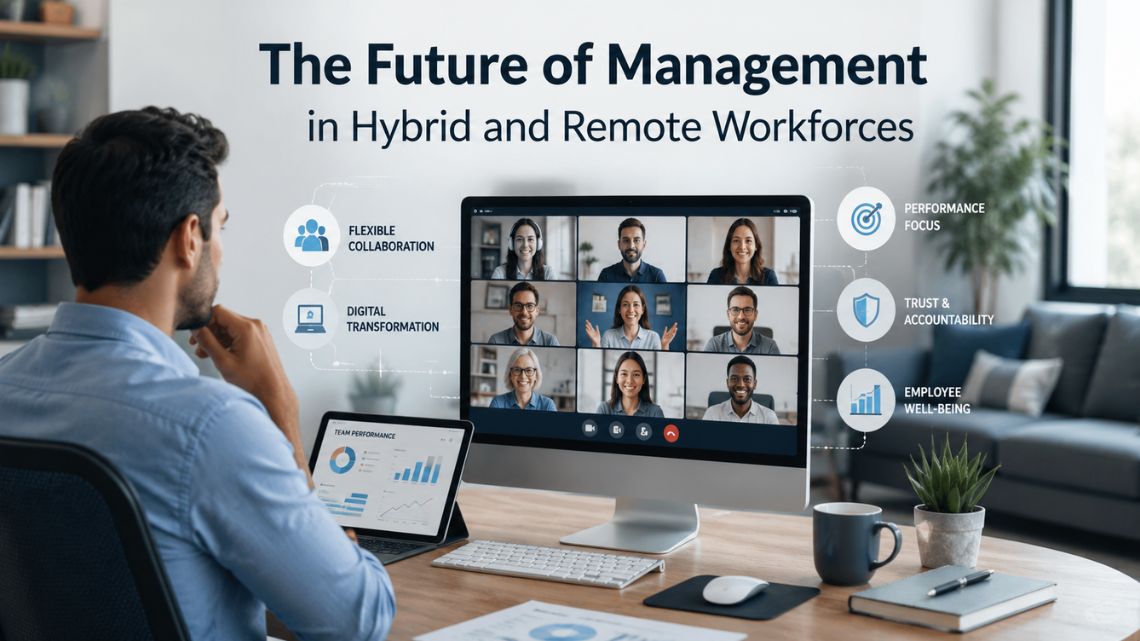
Work models on a global scale have significantly transitioned toward remote and hybrid settings. What emerged as a temporary survival against global disruption has evolved into a most cost effective and long-term business strategy. Management in remorse and hybrid modes reshaping how organizations fundamentally operate, distribute workflows and recruit talent. Across the Gulf, hybrid and remote work are reshaping industries for adapting to digital transformation, enabling businesses to enhance productivity, agility and become future proof. As GCC economies diversify followed by the national visions, reforming from traditional, rigid management frameworks to more technology enabled and innovative approaches will enable companies to accelerate scalability, improve digital collaborations and ensure success around outcome-based performance. This article explores the key trends shaping the future of management in distributed environments and practical strategies entrepreneurs and business leaders can implement to build future-ready organizations.
Future Trends That Shape Hybrid and Remote Workforce Management
AI-Augmented Leadership
Artificial intelligence is emerging as an integral strategic management necessity rather than merely an administrative partner. In the context of remote and hybrid management environments, AI significantly assists leaders to constantly track signals of burnout, analyze productivity trends, automate project distribution, identify collaboration challenges, asynchronous meeting synthesis and support rapid decision-making.
Rather than replacing managers, Intelligent systems enables the reallocation of human proficiencies toward initiatives such as mentorship, coaching, and talent development. Digital collaboration in leadership help remove rigid, turnover causing workflow frameworks, driving avenues for open innovation.
Skills-Based Organizations
Dynamic talent needs have pressed a new wave of transition from the conventionally embraced role-based structures toward solely skills-based workforce planning. Beyond measuring profiles based on job titles, businesses are now compelled to screen employee capabilities and its real time value in the current and future market. By using AI and internal gig platforms, leaders who operate remotely can crowd source skills, track capabilities real time, enable fluid project structuring.
This approach ultimately helps enhance workforce flexibility, improve reskilling, and equip organizations with more effective strategic pivots as with the changing market demands.
Personalized Employee Experiences
In today’s ever evolving business environment, one size fits all corporate strategies become increasingly obsolete. Employees are prioritizing personalized career development, flexible work schedules, cognitive wellbeing and mental health support etc. while considering careers rather than relying on solely remuneration.
Advanced algorithms enables the managerial authorities to effectively design personalized benefits including job structures, development opportunities, and communication preferences. Customized employee EX can significantly enhance genuine engagement and commitment toward the organization while supporting brand advocacy and long-term retention.
Global Talent Ecosystems
Transitioning to hybrid work systems allow businesses across the gulf to recruit elite talent beyond location barriers. Using automated employer of record (EOR) software, organizations can seamlessly manage different tax criterias, local labour codes etc. automatically without hiring specialized experts while expanding into international markets.
By implementing Geo-neutral compensation engines, compliance ingestion, cyber security frameworks, inclusive leadership, and strong digital collaboration ecosystems, enables businesses to build greater innovation, enhance scalability and overall resilience in hybrid and remote settings.
Actionable Framework for Managers
- Evaluate Your Management Approach
Analyze your current management style in order to identify operational biases and check whether there is room for adaptability, teamwork, accountability, and employee satisfaction. Leaders should evolve beyond the old business management styles such as micromanagement, focusing on login indicators, presence, or demanding status updates and move toward an approach of outcome based governance.
- Identify Communication Bottlenecks
Examine the methodologies of your message delivery , meeting formats, and information flows to eliminate unwanted bottlenecks. Clear communication paves the pathway for quick decision-making processes and upholding alignment in opinions.
- Invest in Collaboration Technology
IT integration powered by cloud computing, AI-supported productivity implementations, and advanced digital security systems help improve employee productivity without location boundaries and compromising on operational efficiency. By allocating centralized project management systems, enables mangers to better evaluate and record workflows and auto generate transcripts.
- Shift Performance Metrics to Outcomes
Calculate the success of employees on the basis of the value of contribution they facilitate to the business instead of hours spent in work. Define business aligned OKRs or KPIs including customer satisfaction, concrete project deliverable, and teamwork aimed at promoting accountability in a flexible way.
- Strengthen Trust Through Transparency
Enable employees to openly share the priorities and concerns while pursuing goals. Demonstrate strong feedback loops on a regular basis, reward and appreciate employees for their success, and engage employees in decision-making. This will create a foundation built around trust and transparency, promoting morale and business culture.
- Develop Future-Ready Leadership Skills
Remote team management in this age demands managers who are tech-savvy, self aware, change enablers, effective communicators and people who can manage diverse cultures. Working on communication styles, assessing burnout signals, practicing a purpose driven workflow distribution will help leaders seamlessly influence talent.
- Continuously Gather Employee Feedback
Conduct regular opinion pulse surveys such as polls, performance discussions, and engagement measurements to map out escalating problems and adjust strategies to improve approaches in hybrid workforce management. Listening to employees and co-design work policies will support both employees as well as the organization evolve alongside.
Conclusion
As many companies are adopting hybrid and remote work modes, strategically effective management requires digital fluency, outcome based performance evaluation, transparency, adaptability and trust building than norms of physical oversight. In the Gulf’s evolving business landscape, organizational managers that embrace these aforementioned actionable frameworks in leadership will achieve a lasting competitive advantage.
To read more, visit Entrepreneur Gulf.