
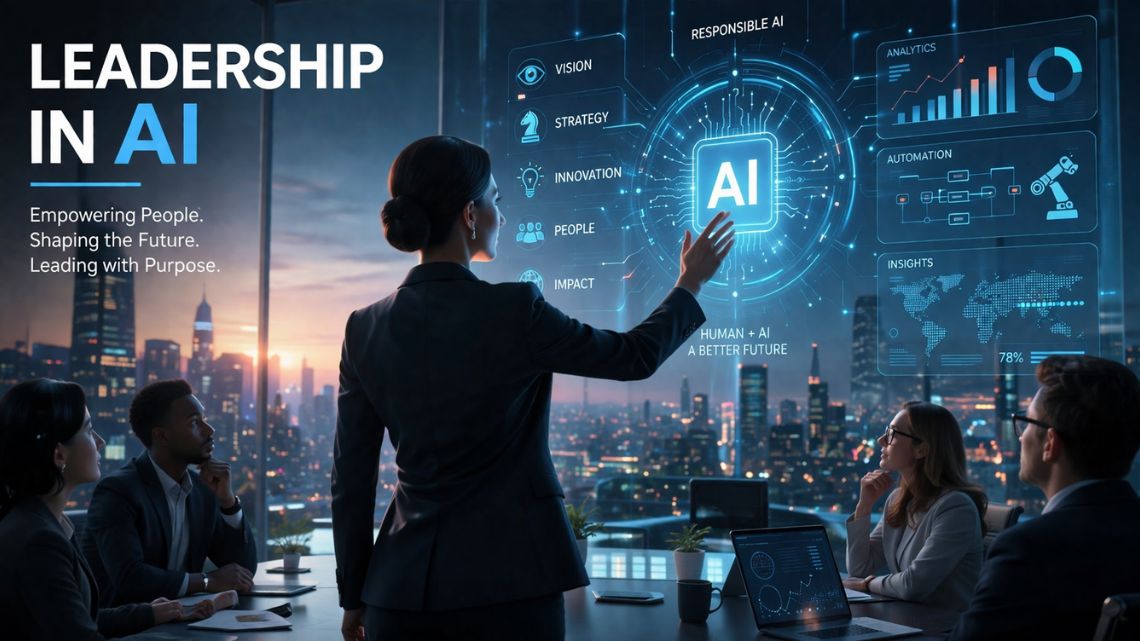
The rapid technological transformations across industries has ushered a fundamental shift in the management architecture across industries. Organizations are transitioning beyond traditional benchmarks of command-control leadership to human centric models which combine digital fluency and human qualities such as empathy and ethical judgement. As traditional leadership levers become obsolete in today’s era, AI driven leadership augments efficiency across the diverse parameters of management. The future of leadership demands artificial intelligence as a frontline strategic operator, eliminating organizational silos, oversight errors by enabling data backed decisions. Intelligence-augmented leadership combines human intuition with data processing power for accelerated integrations.
The currency to management success in modern times is realtime interaction and adaptability. A management framework that leads by bridging ethical blind spots, technical inefficiencies, and strategic styles will cultivate better value surpassing visionary inspiration. This blog explores how leaders can leverage AI to become effective and goal oriented.
Why AI is Critical in Leadership Maturity
- Accelerates Strategic Thinking
- Strengthens Agility and Adaptability
- Improves Organizational Alignment
- Elevates Talent and People Management
- Drives Continuous Learning and Innovation
- Shifts Leadership from Control to Empowerment
What Effective Leadership Defines in an AI Driven World
- Data-Informed, Not Data-Dependent
Transitioning from a paradigm of AI as a substitute for evaluation, leaders should use AI to augment critical thinking, contextual understanding and informed decision making. Data as a strategic asset help define between performance evaluation and the drivers behind the outcome. Instead of sole reliance on data, an approach combining human judgement and data intelligence will help eliminate algorithmic bias bottlenecks in long term mission alignment or localized nuances.
- Human-Centric at the Core
Despite the dominance of automation and digital dependence across the organizational settings, successful leadership necessitates strong human competencies. Especially for entrepreneurs operating in the arena of Gulf, interpersonal leadership skills are integral assets for managing workforce diversity, cultural nuances and business relationships. Leaders who allocate their resources and skills to cultivate safety, proactive empathy and active listening will shape efficiencies that extend beyond current AI capabilities.
- Adaptable and Future-Ready
As learning agility has emerged as a core competency in today’s business landscape, leaders who invest in future readiness rather than expertise will outpace every circumstance. Leadership development through AI driven personalized learning frameworks, implementing tools for streamlining productivity requirements such as scheduling etc. will equip leaders to attain efficiencies that enable them to pioneer ahead of the future leadership challenges. Considering evolving AI tools as partners, leaders can enable constant interaction.
- Ethically Grounded and Responsible
The integration of artificial intelligence in the realm of leadership, it’s necessary to consider the ethical implications AI drives. For establishing transparency, fairness and accountability, leaders should implement systems that will facilitate these values within their newly adopted AI systems. The evolving regulatory framework within the Gulf Co-operation Council compels authorities to demonstrate responsible leadership approaches that inspire trust and confidence among stakeholders in order to facilitate sustainable growth.
- Champions of Collaboration
The measure of leadership success in the Gulf is now measured by AI driven collaboration effectiveness across sectors, industries and borders. Collaborators typically involve stakeholders, government bodies, industry alliances, and across the geographies of GCC. By demonstrating an inspiring collaborative environment leveraging AI, leaders can fuel innovation, enable a pace for shared growth across the entire ecosystem.
- Outcome-Oriented and Strategic
Beyond expertise or effort, successful outcome has become a key performance metric indicating leadership effectiveness. In this context, AI in business provides tools to timely evaluate performance and impact precisely, assisting leaders to improve both individual and overall influence. Especially in today’s age, leaders must orchestrate bridge alignment of efforts toward the organization’s long-term strategic objectives, a strategic element indispensable for cultivating measurable results.
- Empowering, Not Controlling
Modern leadership management is providing individuals and teams within an organisation an authority to autonomy and catalyzing support rather than rigid governance, translating to enhanced operational effectiveness. AI tools help teams access information without the paradigm of top down command, allowing them to make timely decisions independently, fostering an environment of trust and collaboration. By augmenting relationships with their team members, leaders are establishing organisations that are adaptable and innovative.
- Clear Communicators of Vision
Clarity is critical, especially operating in an AI driven environment. As the extensive reliance on AI continues to expand, leaders are required to carefully define how AI supports and augments the workforce and stakeholders in concern with the scope of an organization’s strategic goals. Leaders should use communication skills as a strategic medium to align stakeholders and ensure successful implementation of AI systems into their organisations.
Conclusion
The convergence of cutting-edge technology and futuristic national ambition are quietly redefining the future of organizational leadership in the Gulf Region. Artificial Intelligence not only catalyzes decision making efficiency but also changes our understanding of what it means to be a mature leader. Both government and business are deploying substantial investments in Artificial Intelligence to foster economic diversification, increase operational efficiency, and improving global competitiveness. These changes in leadership will lead organisations from a conceptual framework of experience-based management to a revolutionary style that merges human intelligence and data-driven AI capabilities. Amid the regional accelerations, AI provides a strong opportunity for the leaders to balance human competencies and strategic agility using intelligence, building purposeful and high performing organizations that are positioned to shape the future.
For more articles, visit Entrepreneur Gulf.
Connect with Us:
LinkedIn: https://www.linkedin.com/company/entrepreneur-gulf/
Twitter X: https://x.com/entpre_gulf
Instagram: https://www.instagram.com/entrepreneurgulf/