
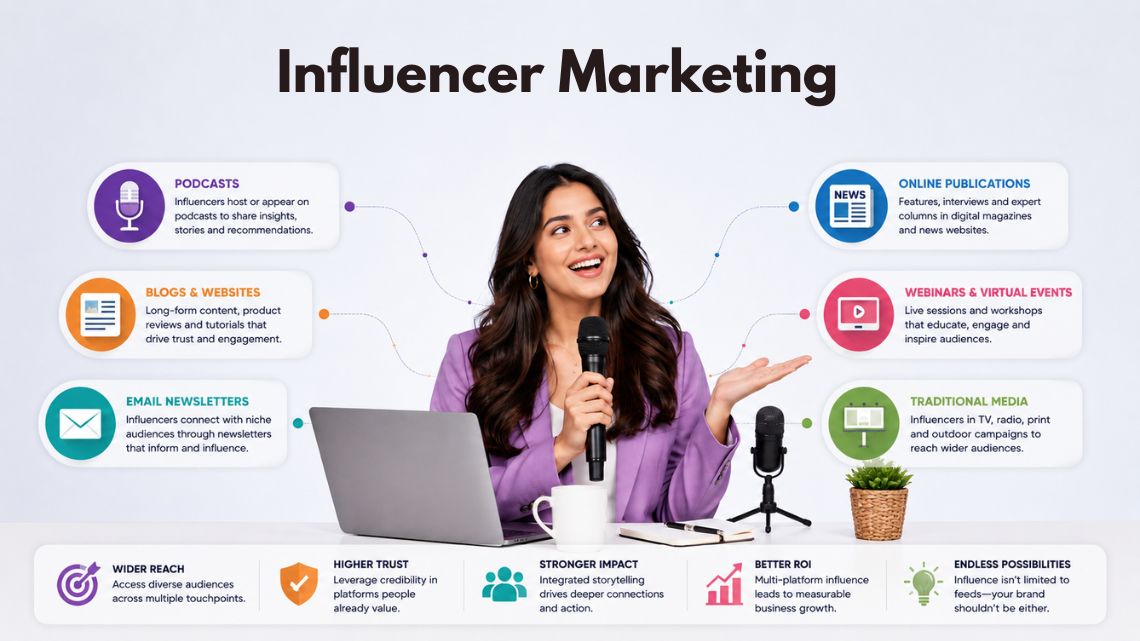
Influencer marketing is undergoing a structural reset across the fast-evolving economies globally. It is quietly transcending from social platforms to embedded knowledge ecosystems, industry networks, and decision-making environments where real business impact is a reality. Especially in the realm of B2B marketing, where buying cycles are inherently complex, influence is defined by authority through credible voices rather than amplification. Despite the influence of social media, leveraging the potential of influencer marketing through new trends, businesses can forge improved marketing success.
Influencer Marketing Is One of The
Influencer marketing refers to the strategic collaboration between brands and individuals who are experts in steering buying intent among their niche audience through authority, knowledge, and relationships. They represent industry leaders and C-level executives to consultants and advisors embedded in business networks. They are well-positioned for catalyzing decisions aligned to business interests among their target segments.
Key Channels Where Influencer Marketing Is Expanding Beyond Social Media
- Owned Media Ecosystems
Future-focused brands are transcending with their own media infrastructure—digital publications, learning hubs, and branded content marketing platforms. Influencers contribute as thought leaders rather than promoters. For example, a fintech business in Dubai collaborates with a regulatory expert to co-author their whitepaper on GCC based banking digital growth.
Why it works:
- Full control over narrative and distribution
- Long-term SEO and brand equity
- Deeper intellectual positioning
- Events and Experiential Marketing
Particularly in a landscape like the Gulf, where meaningful relationships and cultural alignment determine business potential, in-person influence is critical.
Leading includes:
Executive roundtables
Industry summits
Private investor dinners
Panel discussions featuring domain experts
Why it works:
- Direct access to decision-makers
- High-trust environment
- Immediate credibility transfer
Influencers here serve as conveners, speakers, or moderators—shaping conversations rather than broadcasting messages.
- Podcasts and Long-Form Content
In the arena of business, although content marketing formats like short-form video and social copy gain significant traction, predominantly audiences prefer insight-driven, long form content such as podcasts, webinars, and video series that provide space for nuanced discussions.
Why it works:
- Depth over virality
- Builds intellectual authority
- Appeals to depth-focused executives
As influencers, partners with a focus on industry insiders—breaking down complex topics such as AI adoption, regulatory shifts, cross-border expansion, etc.—are integral for building industry-specific reach.
- Newsletters and Community Platforms
Private communities and curated newsletters are becoming critical direct communication channels for marketing influence. In domains of tech, finance, and consulting, newsletters that aligned to customer pain points offer better brand engagement.
Examples:
LinkedIn newsletters by industry leaders
Invite-only Slack or WhatsApp groups
Subscription-based insight communities
Why it works:
- Highly targeted audiences
- Consistent engagement
- Trust built through exclusivity
In the Gulf, where networks often drive opportunities, these micro-ecosystems carry significant weight.
- Product and Ecosystem Integration
The most advanced evolution of influencer marketing is integration—where influencers are embedded into the product or service itself to reframe the brand. These include co-branding products or services by contributing design or naming and featuring influencers as advisory boards for consulting or affiliate ecosystems where influencers become brand ambassadors rather than short-term partners.
Why it works:
- Moves beyond promotion to value creation
- Strengthens credibility at a functional level
- Aligns influence directly with entrepreneurship outcomes
Emerging Models for B2B Influencer Engagement
- Always-on influencer programs
As opposed to one-off campaigns, Gulf enterprises are building always on influencer approaches to maintain long-term relationships.
Key characteristics:
- Continuous collaboration
- Multi-channel presence
- Alignment with brand strategy
In this model, brands are maintaining an ongoing influencer presence by offering them to become guest features, contribute to blog posts, and provide autonomy to actively participate in industry discourse, leading to sustained trust-building.
- Influencer partnerships as strategic alliances
The currency to long-term B2B influence is a collaborative approach such as co-innovation, influencers as strategic alliances, joint intellectual property, etc. When a business invests in influencers as partners, they support brands in understanding the true pain points around the specific industry audience.
Impact:
- Shared growth incentives
- Co-branded initiatives
- Joint market expansion strategies
- Employee advocacy
Internal voices are becoming powerful influencers. In the Gulf, where credibility is tied to expertise and experience, employees can act as authentic brand ambassadors.
Why it works:
- High trust factor
- Deep product knowledge
- Scalable influence
- Micro-influencers and niche experts
In B2B, the concept of depth over volume by capitalizing on micro-influencers and niche leaders is incredibly helpful in directing high conversion rates. Beyond mass reach, how precisely an influencer targets conversion is important. Beyond social media, influencers that lead private Slack channels, Discord servers, or strong inner circle influence are ideal for delivering strategic marketing recommendations.
Advantages of niche experts:
- Highly relevant audiences
- Strong domain authority
- Better conversion potential
In the Gulf’s specialized sectors—like energy, logistics, and fintech—micro-influencers often outperform others, as decision-makers regard their perspectives as peer-driven insights rather than promotional advertisement.
Conclusion
The next wave of influencer marketing in the Gulf will be centered on integration rather than social media exposure. B2B buyers predominantly value suggestions that evolve from their close circles or peer ecosystems based on expertise, relevance, and authority. It is rather the ability to access products & services and develop a long-term strategy to engage with consumers. As credibility becomes the currency for business partnerships, embedding credible voices into their business growth marketing strategy, organizations are able to create a more reliable presence within the marketplace, develop deeper relationships, and establish a competitive edge to outperform rivals.
For more articles, visit Entrepreneur Gulf.
Connect with Us:
LinkedIn: https://www.linkedin.com/company/entrepreneur-gulf/
Twitter X: https://x.com/entpre_gulf
Instagram: https://www.instagram.com/entrepreneurgulf/