
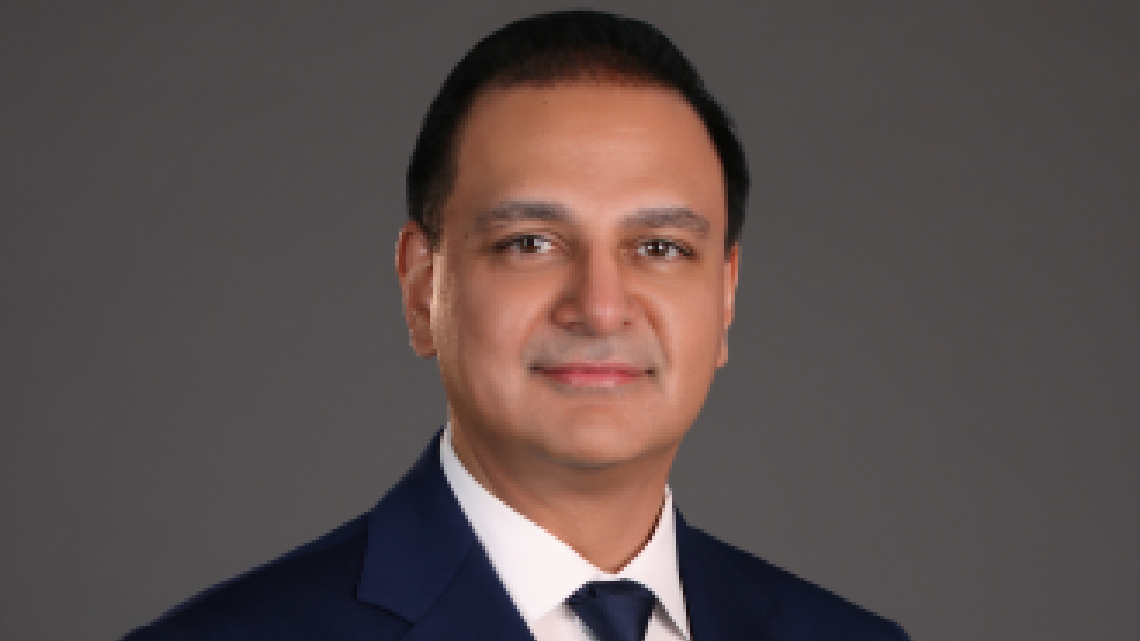
Zeeshan Shaikh, Founder, Luxakari Hospitality Group
Makkah and Madinah are not simply places people visit; for millions of Muslims, they represent faith, memory, belonging, and spiritual connection. A journey to the Haramain carries a significance that extends far beyond the duration of a stay, bringing families from across the world to places where hospitality takes on a deeper meaning. As these historic cities continue to evolve, so does the experience of those who visit them. Today’s travelers increasingly seek comfort, privacy, thoughtful service, and the familiarity of home, while also looking for an experience that reflects the spiritual significance of their journey. It is this balance between modern hospitality and the deeper significance of the Haramain that sits at the heart of Zeeshan Shaikh’s vision.
With more than two decades of experience in real estate, Zeeshan has spent his career understanding how markets, properties, and consumer expectations evolve. Today, he is bringing that experience into hospitality through Luxakari Hospitality Group, creating a model that brings together residential living, premium hospitality, and personalized services for families visiting the Haramain, while helping property owners unlock greater value from their assets. The company partners with landlords and developers to transform residential buildings into sophisticated, amenity-rich destinations. Through short- and long-stay offerings, concierge services, and mobility solutions, Luxakari is building an integrated hospitality experience designed around the needs of guests, families, and property owners.
The Values That Started It All
Born in Bahrain and raised in Abu Dhabi, Zeeshan moved to Canada at 15. He grew up watching his parents navigate the ups and downs of business and changing market forces, experiences that gave him an early understanding of the realities of entrepreneurship. He started his first company at seventeen in Canada, where he learnt the importance of testing the market quickly and pivoting even faster when the customer tells you what they need. That experience shaped a principle that continues to guide him: flexibility and adaptability are keys to success.
Hospitality, however, was something Zeeshan absorbed at home. “From an early age, I watched how my parents treated our guests—everything was possible, and ‘no’ to a guest did not exist in our vocabulary. Dealing with everyone, regardless of social status, with warmth, compassion, and a smile is what I internalized from my father,” he recalls. His mother, meanwhile, taught him to be resourceful, stay organized, and keep a proper, fair account of business dealings and finances. Together, these lessons gave Zeeshan an early understanding of both thoughtful hospitality and sound business discipline, values that continue to shape how he approaches business today.
Real estate has been a significant part of Zeeshan’s entrepreneurial journey for more than two decades. His experience spans investment and development across different markets, including an early investment with Nakheel on Dubai’s Palm Islands in 2003, during the emergence of the region’s freehold property market. Over more than two decades, Zeeshan has also ventured into PropTech, AI, and city-level digital twins, bringing together physical real estate, technology, and service in a way that now informs his approach to hospitality-infused living and the wider ecosystem he is building through Luxakari.
The Rise of Hospitality-Infused Living
After more than two decades in real estate, Zeeshan and his brothers had worked across investment, brokerage, and development in different geographies. The experience taught Zeeshan the importance of creating value for investors and adapting as markets and consumer expectations change. It also planted the early seeds of what would become Luxakari’s hospitality-infused living model. In their villa developments, the family pioneered the “resort home” concept in the region’s luxury golf communities, bringing together the appeal of a private residence with elements of a resort experience. The concept has since been followed by many developers across the region. Those experiences eventually converged in Madinah, giving birth to Luxakari.
“Millions of Muslims visit the city of the Prophet PBUH every year, and under Vision 2030 initiatives that number is multiplying. Yet premium serviced residences combining world-class standards with genuine spiritual warmth remained scarce,” explains Zeeshan. By combining hospitality with residential living, Luxakari brings the privacy and comfort of a home together with the standards and service of premium hospitality. For families investing in Luxakari’s Madinah and Makkah properties, the proposition is threefold: rental yield through the company’s management, long-term capital appreciation potential, and a legacy asset in the holy cities for generations to come. The company’s approach has also received international recognition. At the 2026 IFP Real Estate Awards in London, the company was honored with two prestigious awards: Best New Hospitality-Infused Residential Living Concept and Best New Luxury Serviced Residence Operator.
Resilience through the Downturns
Zeeshan’s approach to entrepreneurship has also been shaped by difficult markets. He has experienced three major real estate downturns, with the 2008 global financial crisis being one of the most challenging periods of his career. Even large institutions and governments faltered during the crisis, but his family chose to confront the challenges directly, focusing on solutions while maintaining relationships with their stakeholders through honesty and integrity. They did not cut corners or walk away from difficult situations. Instead, Zeeshan, his parents, and brothers worked together to weather the storm, an experience that strengthened his belief in family unity and resilience.
The experience also shaped the way Zeeshan assesses the people he works with. He prefers to work with individuals who have faced challenges and overcome them, rather than those who “made hay only when the sun shined.” “I also learnt that navigating adversity can lead to opportunity. If you look closely and analyze, negatives can be turned into positives,” he adds.
Making Each Stay More Comfortable, Meaningful and Memorable
The guest experience sits at the heart of how Luxakari approaches hospitality. “All that we do begins and ends with the guest family in mind. We put ourselves in our clients’ shoes and think about how we can elevate their experience,” shares Zeeshan. Luxakari also focuses on experiences that larger hotel brands may find difficult to deliver at scale. For instance, it is the first hospitality operator in Madinah to have a resident Imam. During their stay, guests can arrange a private thirty-minute session with the resident Imam, giving the entire family an opportunity to participate in an open Q&A and ask questions on a wide range of topics.
The company also organizes Ziyarah tours, helping guests connect the history and significance of Madinah with the specific places they visit. These experiences are designed to make a stay more than simply comfortable; they give families opportunities to learn, reflect, and connect with the destination in a more meaningful way. “We are blessed, and we see ourselves as a bridge connecting the Ummah to the Haramain (Makkah and Madinah). When you see yourself through this lens, commercial considerations become secondary, and your broader impact through creating meaningful experiences is what matters,” says Zeeshan.
Leading Through Action and Accountability
For Zeeshan, leadership is less about giving instructions and more about setting the standard through his own actions. His approach is summed up in a simple philosophy: “more action, less talk.” He believes a leader should remain accessible to the team, be willing to step in when needed, and demonstrate the same commitment and accountability expected from others. At Luxakari, this translates into a fast-moving culture where employees are encouraged to take ownership. Zeeshan also challenges what he calls “reverse delegation,” where problems are passed back to leaders instead of being handled by the person responsible.
At the same time, he encourages his team to take calculated risks, test new ideas, and see failure as part of learning. Alongside innovation, Zeeshan places equal importance on integrity, generosity, and doing the right thing. “Many companies look for shortcuts to the top; we focus on building long-term value and a culture of excellence. To be of service is the greatest calling and we invite others to join the Luxakari family on this journey,” he affirms.
Purpose over Balance
Zeeshan does not believe entrepreneurship fits neatly into the traditional idea of work-life balance. For him, pursuing ambitious goals requires a level of commitment that goes beyond a nine-to-five mindset. Particularly at the outset, he acknowledges that building a business can mean giving up time with family and friends. But he credits his supportive spouse and children for helping him through that journey while also learning to be more efficient with his time and fully present when he is with his loved ones.
Over time, he has also learnt that not everything needs to rest on his shoulders. Surrounding himself with people he can trust and delegate important responsibilities to has become an important part of building Luxakari for the long term. It is a culture of trust that he is continuing to build within the company. “Ultimately, balance for me comes from purpose: when your work is itself an act of service, the line between work and life softens,” he asserts.
A Bigger Vision for the Haramain
When companies are short-sighted, Zeeshan believes they see things through a lens of scarcity. Luxakari, by contrast, sees things through a lens of abundance. “While others compete over a share of a smaller pie, we ask how to make the pie bigger for everyone to participate. Strategic partnerships help you grow your footprint and horizons without a heavy impact on your human and financial capital,” explains Zeeshan.
His long-term vision is for Luxakari to become the most trusted hospitality-infused living brand serving the Haramain, an ecosystem spanning serviced residences, mobility, concierge and loyalty, and a bridge for Muslims worldwide to invest in, live in, and experience the holy cities. “That bridge has never been more real,” he says. The Kingdom’s historic 2026 legislation on non-Saudi property ownership has opened the holy cities to qualified Muslim investors for the first time, beginning a new chapter in a conversation with two billion Muslims around the world. His advice to entrepreneurs follows the same philosophy: “Anchor yourself in service, not transactions.” He encourages entrepreneurs to solve a real need for a real community, build trust patiently, and let innovation follow purpose. As he puts it, “When guests and investors are treated with equal integrity, growth takes care of itself, insha’Allah.”