
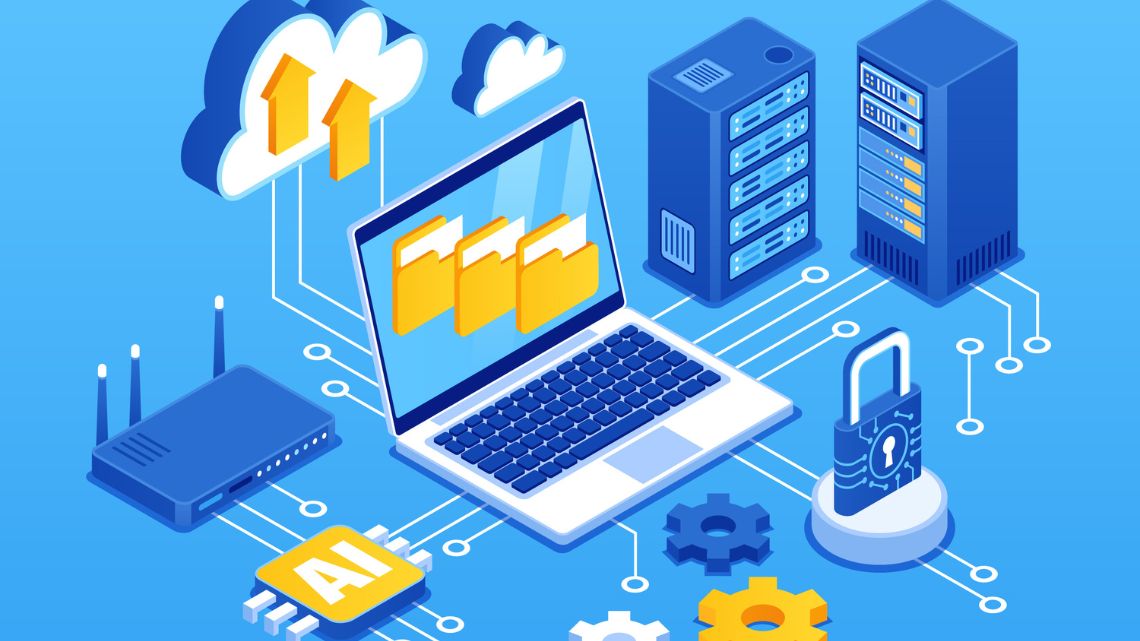
Cloud Computing Has emerged from a flexible IT upgrade to a foundational necessity for modern businesses that aspires to scalability and competitiveness. It enables companies to transition from capital intensive management models to cost efficient and responsible models, instrumental for growing in a landscape where regulations and digital evolutions constantly pioneers. For entrepreneurs in the gulf, constantly adopting to the digital changes will potentially support enhancing decision intelligence, cybersecurity and reputation among the global market. Staying ahead of the curve leveraging cloud solutions will transform businesses with enhanced innovation potential, operational stability and help them excel in performance outpacing the competitors regardless of enterprise size or scale.
What is Cloud Computing?
Cloud computing refers to a virtualized, shared pool of configurable computing resources such as servers, storage, databases, software and AI over the internet. It provides scalability and convenience of pay-as-you-go model for businesses. In contrast to the legacy infrastructures, cloud computing eliminates the need of capital intensive physical hardwares, allowing enterprises to transition toward OpEx modes for resource usage. The most acclaimed cloud service models include Infrastructure-as-a-Service (IaaS), Platform-as-a-Service (PaaS), and Software-as-a-Service (SaaS).
In today’s ever evolving business landscape, cloud technologies in business emerges as a major contributor for innovation acceleration through facilitating cutting edge technology solutions such as Gen AI and quantum computing without the barriers of heavy upfront costs. This financial stability enables businesses of all sizes to enhance performance efficiency and innovation.
Industrial Use Cases Scenarios
- Real time, advanced fraud case detections through AI driven analytics in financial services
- Telemedicine and secure patient data management in healthcare
- Predictive modeling and personalized customer experiences in the domain of Retail
7 Top Cloud Computing Trends for Businesses
- AI and Machine Learning (AI/ML) Integration
In this highly digital driven era, AI is no longer an optional objective but a strategic driver for business growth. By 2029, more than 50% of cloud services are projected to be optimized for AI workloads. With the integration of AI and ML capabilities as native services, organizations are able to capitalize on intelligent automations, predictive intelligence data pipeline to augment decision making, as systems track and detect anomalies and facilitate optimized end-to end performance.
- Edge Computing
It potentially helps decentralize data processing while reducing latency. In synergy with 5G technology, Edge computing enables capabilities for real time decision intelligence in automated vehicles. By bringing cloud closer to data sources, critically for IoT and smart infrastructures, entrepreneurs can amplify responsiveness.
- Serverless Computing and Microservices Architecture
Serverless computing marked a revolutionary impact by facilitating management with micro service architectures. It is primarily driven by code focused exclusion and cloud provides are the native sources of maintenance and scaling. As cloud models use a granular model, it significantly supports organizations to operationalize objectives without the constraints of finance. For small and medium size enterprises in the gulf, this agility help them scale independently across markets while reducing the overhead.
- Cloud-Based Cybersecurity (Zero Trust)
Amid the rising cloud adoptions, the probability of cyber attacks is also becoming increasingly apparent. Transitioning from the conventional models of premiere based security models to Zero Trust Architectures (ZTA) —every access request is verified before trusting regardless of the origin of data. This enhanced confidentiality in computing will translate to reduced risk throughout data storage and transactions.
- Industry Cloud Platforms
A significant array of companies are moving to the cloud to leverage solutions that address their specific regulatory, operational and performance requirements. Industry cloud platforms are being introduced as part of this transition; they consist of:
- Pre-defined compliance frameworks
- Data models designed specifically relevant for the respective industry
- Workflows and application programming interfaces
Therefore, companies are able to accelerate their digital transformation, while reducing complexity and enabling them a competitive advantage through optimised domain-specific solutions.
- Green Computing
Sustainability in business has become a crucial competitive edge in the domain of corporate. Therefore, cloud providers have significantly direct investments for energy-efficient data centres, renewable energy sources and carbon-neutral operations.
When companies implement a ‘green cloud’ strategy, they will benefit from the following:
- Reductions in environmental footprint
- Alignment to Environmental, Social and Governance (ESG) goals
- Increased reputation and trust among customers and stakeholders
A strategy for the sustainable future of cloud computing is no longer a ‘nice-to-have’, it has become a key differentiator in an increasingly competitive marketplace.
- Quantum Computing as a Service (QaaS)
As quantum computing is evolving beyond the paradigm of experimental labs to a cloud-accessible service, businesses can enable practically aligned applications of quantum computing via Quantum Computing as a Service (QaaS). By integrating QaaS in complex problem solving agendas, eliminating the requirement of purchasing expensive quantum hardware solutions.
Examples of potential applications for QaaS include:
- Enhanced cryptography
- Logistics and supply chain optimisation
- Drug discovery and material science
Although QaaS continues to be in its infancy, it represents an opportunity for an enormous expansion in computing capacity and the potential for re-thinking long term strategic planning.
Cloud Computing Advantageous for Businesses
- Cost Efficiency
- Scalability & Flexibility
- Business Continuity
- Enhanced Collaboration
- Global Accessibility
- Accelerated Innovation
Conclusion
Cloud computing has evolved into a vital enabler of competitive advantage in today’s age of digital transformation. Predominantly driven by AI-based intelligence, the addition of new technologies, edge capabilities, and the demand for sustainable infrastructure, the cloud ecosystem in business is evolving at an extraordinary pace. Businesses that invest in cloud strategies including AI and ML integrations, edge computing, QaaS, Cloud security and Industry Cloud platforms, and business objectives, developing scalable and secure architecture investments, and creating a culture of will establish the future benchmark for digital disruption and market leadership.
To read more, visit Entrepreneur Gulf.