
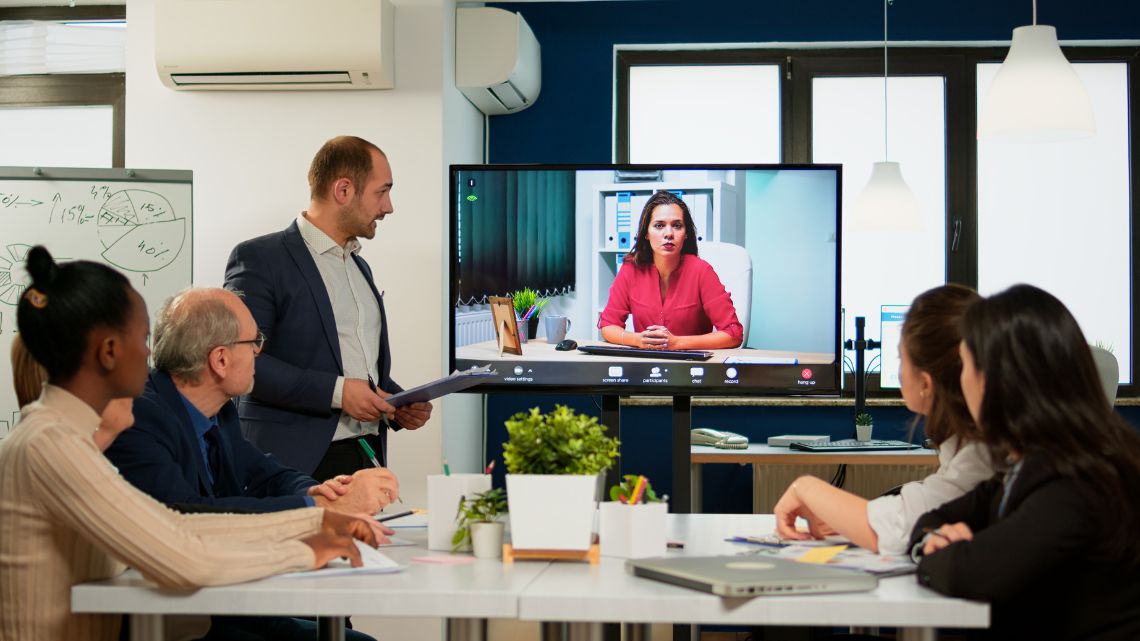
The Gulf’s Vision 2030 initiatives are hastening digital transformation industry-wide, impacting the way organizations lead and operate as hybrid work continues to gain traction. This posed numerous challenges such as talent localization and global talent accessibility to those in managerial positions. pivotal for leaders to master how to balance the competing leadership priorities. In this revolutionary workplace reality, managing hybrid teams cannot be achieved solely through policies or tools but with a confluence of factors, including leadership maturity, adaptability, and the ability to lead with clarity, trust, and outcome-centered management.
What is Hybrid Leadership
Hybrid leadership is defined as an exclusive leadership method, designed to manage teams operating in hybrid settings. It focuses on core pillars of accountability, organizational agility, and alignment with workforces to streamline effective business development in hybrid work modes. In contrast to standard workplace leadership strategies, which emphasizes presence and supervision, the hybrid approach concentrates on engagement, clarity, and consistent performance outcomes. In this, the leaders replace control-driven authority with clearly defined goals, autonomy, digital-first collaboration, and engagement initiatives rather than proximity.
Core Principles for Hybrid Leadership
- Fairness & Equity
Equality and fairness perspectives as essential leadership skills must be applied when creating hybrid organizations; it is essential that leaders create fairness in providing tool accessibility, visibility, and career advancement across all employees, especially in the Gulf region, where exposure has historically created opportunity for certain groups.
- Transparency
This increased need for transparency is required when there are numerous barriers of physical stewardship to communicate effectively. Leaders must provide clarity and purpose regarding their decisions, such as promotions or any internal transitions, in order to eliminate confusion and build trust among a disparate team.
- Outcome-Based Approach
Changing the benchmark of performance-based evaluation to an outcome-based approach involves a necessity to redefine those expectations and values that conventionally were a norm. Leaders need to exchange messages clearly and explain what success looks like at both the individual and team levels.
- Trust & Autonomy
Without established leadership in organizational alignment, providing autonomy to employees is a risk. The successful hybrid leader will provide autonomy but will also define boundaries regarding how employees may use this freedom, thereby allowing for efficiency while ensuring accountability.
- Inclusive Culture
Hybrid organizations will only be effective if they have an inclusive culture. Creating an inclusive environment in a hybrid organization demands efforts to create intentional rituals such as shared forums for the purpose of creating collaboration and mutual respect and for rotating leadership in meetings and equal voice regardless of location.
Effective Strategies for Leading Hybrid Teams
- Align with Local Regulations and Culture
Leaders who handle hybrid teams should ensure compliance with local labor laws and nationalization policies and invest in addressing the cultural expectations. The alignment with regional standards is important for establishing trust among employees, eliminating legal risks, and fostering employer reputation.
- Redefine Performance & Expectations
Leaders need to reevaluate the norms for performance effectiveness from presence and accelerated delivery to outcome-based and quality. Particularly in the context of remote teams, where constrains of visibility poses significant in efficiencies, hence providing a sound articulation of expected outcomes, structured timelines, and success metrics will essentially help surpass the ambiguity in teams and ingrain accountability.
- Foster Inclusive Communication & Collaboration
Transparent and clear communication touchpoints are substantial enablers for effective hybrid team management. Establishing a set of communication frameworks that facilitate inclusion and participation for both in-office and hybrid networks. Eliminating favoritism in meetings, inclusive decision-making latitude etc. are closely aligned strategies in an inspiring and transformational Leadership model.
- Prioritize Team Connection & Well-being
Sustaining employee well being and connection between them as a priority within fragmented teams will foster collective cohesion. This strength can enable enhanced collaboration and performance outcomes. Through regular check-ins to understand employees’ emotional cues, well-being initiatives, etc., will translate into internal stability.
- Promote Asynchronous Communication
Ensuring interactions, collaboration effectiveness, and workflow alignment are consistent across different timelines and zones is pivotal for organizational success, especially when globally distributed workforces are spanning across diverse demographics. By allocating shared dashboards, documented updates, allowing flexible response liberty, etc., teams will be empowered to work effectively without being fatigued and unmotivated due to burnout and rigid control.
How to Avoid Proximity Bias in Leadership
- Communicate intentionally
Leaders should ensure that all employees receive updates, recognition, and feedback, whether in office or working from diverse remote locations.
- Train for bias awareness
Predominantly, leaders do not intentionally create bias; however, it does present itself in all likelihood.
It is critical that all leaders be cognizant of their own biases, as it will serve as a protection against lack of motivation in others.
- Promote fair evaluation
Be fair with performance reviews solely on the outcome results and evaluated on visibility.
Management systems that govern performance reviews should support and reinforce this objective continuously.
Conclusion
As workplaces move toward a transformative realm of hybrid and remote modes, the way we work changes, compelling leaders to prioritize adaptability, cultivate inspiration, and focus on outcome-based evaluation in order to overcome the constraints on supervision. Leaders who establish successfully flourishing and engaging remote teams will be those who utilize trust, accountability, and cultural intelligence over traditional control-based management. Hybrid leaders will create the ability to achieve long-term productivity and resilience by maintaining team connection, inclusivity, and asynchronous communication.
For more articles, visit Entrepreneur Gulf.
Connect with Us:
LinkedIn: https://www.linkedin.com/company/entrepreneur-gulf/
Twitter X: https://x.com/entpre_gulf
Instagram: https://www.instagram.com/entrepreneurgulf/